
As a Global Advanced Blue Cut Lenses Exporter, Kingway Links Progressive, Photochromic, and Polycarbonate Combinations
Sep 18, 2026
Danyang, Jiangsu Sep 17, 2026 (Issuewire.com) - When evaluating procurement options, what defines a global advanced blue cut lenses exporter? For wholesale and distribution buyers, the defining capability is treating the blue-cut function as a distinct specification layer that can sit securely on top of different optical designs, materials, and refractive index routes. A reliable global advanced blue cut lenses exporter avoids reducing the entire inventory to a single functional label, ensuring that buyers can still specify exact technical configurations. As an established optical lens manufacturer since 2011, Kingway provides a combination-led sourcing route through its anti-blue lens taxonomy. By offering 1.56 blue-cut, progressive blue-cut, photochromic blue-block, 1.61, 1.67, and 1.591 polycarbonate routes, the company enables business buyers to identify the base lens architecture before adding the blue-cut functional requirement.
Blue-Cut Lens Sourcing Starts with the Base Lens Architecture
Blue cut is a functional requirement, not a complete lens specification. When a distributor or Rx laboratory submits a purchase order, that order still needs to identify the fundamental parameters of the lens. Procurement teams must define whether the target lens is single vision or progressive, clear or photochromic, a resin high-index material or polycarbonate, and whether it requires stock quantities or prescription-based processing.
Treating the blue-cut feature as an add-on layer rather than a standalone category gives optical distributors a cleaner way to build their catalogues and RFQs. It prevents the common sourcing error of treating different material and design combinations as interchangeable just because they share the same anti-blue label. For chain-store category managers, separating the functional coating or material formulation from the optical design ensures that the resulting inventory meets precise patient needs without creating specification gaps. When an importer evaluates a global advanced blue cut lenses exporter, the supplier's ability to map these distinct variables directly impacts the accuracy of bulk deliveries and customized OEM envelopes. This accuracy extends to the factory floor, where the processing workflow--spanning precise grinding, polishing, cleaning, and drying stages--must be strictly calibrated to the specific base architecture before any functional treatments are applied.
Progressive Blue Cut Creates a Multifocal Configuration
Kingway's portfolio includes a specialized 1.56 progressive blue-cut route, effectively combining a complex progressive optical design with the required blue-cut function. Progressive orders introduce additional geometric complexity, adding fitting, corridor, prescription (Rx), and frame considerations that go far beyond a simple functional coating or filtering requirement.
For Rx centers and prescription-lens laboratories, the progressive specification must lead the conversation. Buyers must prioritize the multifocal design and fitting inputs--such as a 9+4mm or 12+2mm shorter corridor selection depending on frame height and patient usage--with the blue-cut feature added subsequently as one specific functional requirement. This ordered approach keeps the procurement request compatible with the FreeForm processing and corridor-selection logic used elsewhere in Kingway's progressive lens program. By anchoring the specification to the progressive geometry first, technical stakeholders can guarantee that the multifocal performance remains the primary driver of patient satisfaction, while the blue-cut attribute acts as a supplementary layer of functional value. Furthermore, this ensures that subsequent manufacturing stages, such as hard coating (HC), anti-reflective (AR) treatments, and precision marking for alignment, are executed perfectly according to the progressive lens's unique surface topology.
Photochromic and Blue Cut Functions Can Share One Product Route
Beyond multifocal designs, Kingway's optical range also includes a 1.56 Photogray blue-block product. This configuration creates a combined functional route in which photochromic light-adaptive behavior and blue-cut function coexist on the exact same lens platform. Zhenjiang Kingway Optical Co., Ltd. manufactures these finished and semi-finished optical products across multiple indices, providing the wider production infrastructure necessary for these advanced functional combinations.
While these two functions operate on the same 1.56 lens, they must still remain distinct in the buyer brief because they answer completely different use requirements. Photochromic technology responds to UV exposure, adapting for indoor and outdoor transitions, while bearing in mind standard in-car UV windshield limitations. The blue-cut function operates independently of UV darkening. By keeping these requirements separate in the RFQ, a distributor can request a photochromic blue-cut combination deliberately, rather than assuming that one feature automatically includes the other. This clarity prevents chain-store buyers from receiving clear blue-cut lenses when their market actually requires outdoor light adaptation. It also allows the manufacturer to apply the appropriate tinting or photochromic technology during the production process without compromising the underlying blue-cut material properties.
Polycarbonate Creates a Separate 1.591 Material Route
The anti-blue taxonomy also features a 1.591 blue-cut lens, connecting the functional requirement directly with Kingway's polycarbonate material route. In professional sourcing, polycarbonate should always remain a fundamental material decision rather than being presented as just another name or marketing term for a blue-cut product.
This material distinction matters deeply for procurement teams because the substrate affects the base lens platform's impact resistance, specific gravity, and processing behavior, while blue cut merely describes an added functional requirement. This strict separation helps distributors and wholesalers accurately compare 1.591 polycarbonate configurations against traditional resin high-index routes without changing the fundamental meaning of the blue-cut field. When the 1.591 route is needed, the RFQ must identify both the material and the function. Consequently, a polycarbonate blue-cut request preserves the material name in the product description, preventing the configuration from being reduced to its functional label. This discipline keeps material selection highly traceable through quotation, production, quality inspection, and final order review.
1.61 and 1.67 Extend the Blue-Cut Index Matrix
To support varied prescription demands and frame types, Kingway's range includes 1.61 and 1.67 blue-cut products alongside the standard 1.56 and 1.591 routes. These thinner, high-index options allow wholesale buyers and Rx laboratories to organize their inventory range by refractive index or material after the intended optical design and primary function have been definitively established.
A practical, highly accurate B2B specification typically uses four sequential layers: the optical design (single vision, flat-top bifocal, round-top bifocal, or progressive), the material or refractive index (1.56, 1.591, 1.61, 1.67), the clear, photochromic, or blue-cut function, and finally the surface coating (AR, HC, or HMC) and specific Rx requirements. That multi-layered structure is significantly more precise for bulk ordering and customized OEM packaging than a basic catalogue built around one generic blue cut lens category. When working with a global advanced blue cut lenses exporter, leveraging this structured index matrix ensures that every wholesale batch meets the exact mechanical and optical requirements of the target market. A higher refractive index yields a structurally thinner lens for high-prescription patients, which demands rigorous quality inspection (QC) and careful assembly workflows to maintain edge integrity and surface durability.
Blue Cut Lens Sourcing FAQ for B2B Buyers
These questions keep blue-cut selection focused on the correct product architecture, material substrate, optical design, and functional combinations.
Is Blue Cut a Lens Material?
No. Blue cut is a specific functional requirement that can be combined with completely different lens materials, refractive indices, and optical designs, such as resin or polycarbonate.
Does Kingway Offer Progressive Blue-Cut Lenses?
Yes. Kingway's anti-blue portfolio includes a dedicated 1.56 progressive blue-cut route, supporting multifocal designs alongside the functional requirement.
Can Photochromic and Blue-Cut Functions Be Combined?
Yes. Kingway's product range includes a 1.56 Photogray blue-block configuration that successfully combines both light-adaptive and blue-cut functions in a single product route.
Which Polycarbonate Route Appears in the Blue-Cut Range?
Kingway's range includes a 1.591 blue-cut lens, ensuring that the functional requirement is securely connected to a durable polycarbonate platform.
What Should a Distributor Include in a Blue-Cut RFQ?
An accurate RFQ should define the optical design, material or refractive index, clear or photochromic function, the blue-cut requirement, coating preferences (AR, HC, or HMC), prescription or stock status, target quantity, and any customized envelope packaging instructions.
Specify a Global Advanced Blue Cut Lenses Exporter RFQ by Design, Material, Index, and Function
A global blue-cut sourcing brief always works best when the functional requirement is explicitly attached to a clearly defined underlying lens architecture. That methodical approach gives a global advanced blue cut lenses exporter request enough technical detail to accurately distinguish progressive, photochromic, polycarbonate, and high-index combinations without mixing or confusing the underlying concepts. By treating blue-cut as an integrated but distinct layer, wholesale buyers secure exactly the inventory their chain stores and Rx centers require.
For precise product matching, bulk quotation, and customized OEM envelope planning, send the required lens combination directly through the https://www.kingway-optical.com/ official website.
Source :Zhenjiang Kingway Optical Co., Ltd.
This article was originally published by IssueWire. Read the original article here.
More News

The Belgian musician fusing Western, Chinese instruments for ‘something totally different’
Johan Famaey is considered the only professional yangqin player in Belgium. When he returned to Belgium from Qingdao, China, in 2009, most people in his home country had never heard of the instrument and knew little about Chinese culture. The 47-year-old musician, who is primarily a pianist, performs with a yangqin in Belgium and beyond, showcasing both Western and Eastern music traditions in his compositions. “Whether it’s a piano, whether it’s a yangqin, we all have this in common that we try...

27 Fashion Pieces That Reviewers Wore On Vacation And Would Be Perfect For Your Next Trip
✨ "Best travel dress yet!" ✨ "I bought two and wished that I had five." ✨ "I felt both stylish and comfortable throughout my trip." ✨ Safe to say, reviewers LOVE these pieces. View Entire Post ›

Explorer Lucy Shepherd on Expeditions, Obstacles and Travel Essentials
The British explorer is back with a new book and TV show. The post Explorer Lucy Shepherd on Expeditions, Obstacles and Travel Essentials appeared first on Business Traveller.

I Stayed In Crete’s A-List Hideaway, And Now I Understand Why Celebrities Keep Coming Back
From ridiculously clear seas and fresh seafood to historic islands and A-list-approved tranquillity, Elounda has it all. View Entire Post ›

Luxury brands destroy unsold stock to preserve exclusivity. That may soon change
Earlier this month, shoppers on Yoox could snap up suede Brunello Cucinelli trainers for €617 (US$700), around half the price on the brand’s official website. If they felt like pairing them with a beige Gucci miniskirt, that was available for €800, close to 50 per cent off as well. A Burberry T-shirt? The e-commerce website sold one for less than €200, or 60 per cent off its original price. Overall, some 2,500 products from the three labels were available, heavily discounted. It is a sign of the...

Egg freezing is becoming significantly more popular in Canada
Over the last decade, egg freezing has become significantly more popular. According to data from the Canadian Fertility and Andrology Society (CFAS), there were 2,663 retrieval cycles for the purpose of freezing, or banking, eggs reported in 2025. Compare that number to 2013, when there were only 217 such procedures logged.
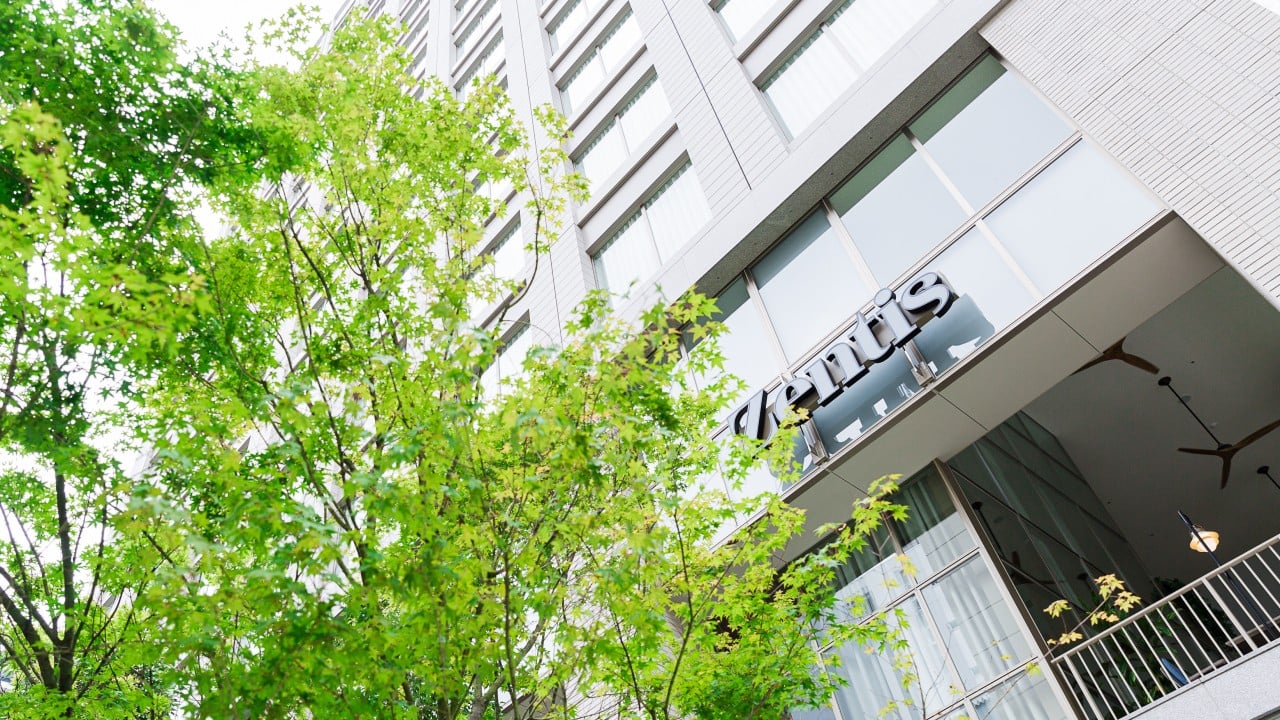
Japan’s Zentis Osaka offers a restful stay in the bustling Umeda district
Osaka, the third largest city in Japan, lacks the charm of Tokyo or the historic appeal of nearby Kyoto. Home to Kansai International Airport, Osaka is often a jumping-off point for more popular nearby destinations such as Kyoto, Nara and Kanazawa, all a short train ride away. While Osaka is not the typical tourist town with must-visit attractions like temples, shrines and museums, it’s still a great place to hang out and spend a couple of days to enjoy local specialities such as okonomiyaki and...

Experience the Magic of Christmas & New Year in St. Louis
From sparkling light displays and outdoor ice skating to festive dining, Christmas shopping and spectacular New Year celebrations, St. Louis, Missouri, comes alive during the holiday season. Home to an impressive array of free attractions, including the Saint Louis Zoo, Saint Louis Art Museum and Missouri History Museum, the city offers an affordable festive escape for families, couples and friends alike. Whether visitors are looking for magical winter experiences, seasonal entertainment or a festive city break, St. Louis offers plenty of ways to celebrate Christmas and welcome 2027.

Adventure and Wellness Make Georgia a Favourite Getaway for Gulf Travellers
Georgia is becoming a go-to destination for Gulf travellers who want more than a standard city break. Adventure in the mountains and restorative wellness retreats are leading the appeal, helped by short flight times and easy entry. The country recorded 145,513 visits from GCC countries in 2025, a 3.4% increase on the previous year. Momentum was stronger earlier in the year. Visits from Gulf countries reached a record 26,397 in the first half of 2026.

Adventures with no age limit: 12 incredible holidays for 2027
From sailing to the remote islands of French Polynesia and exploring Japan’s ancient Zen traditions to riding a historic steam train through Colorado’s Wild West, some adventures are simply too good to miss, whatever your age. For travellers in their 50s, 60s, 70s and beyond, 2027 offers plenty of opportunities to discover somewhere new, revisit places that hold special memories or finally embark on a long-dreamed-of journey. Whether it’s retracing the footsteps of Elvis Presley in Memphis 50 years after his death, discovering the wild landscapes of Florida’s Everglades or taking the scenic route to the French Alps aboard a sleeper train, these 12 unforgettable holidays prove that a sense of adventure never gets old.

TOURISM IS GROWING - THE CHOICES MADE NOW WILL SHAPE ITS FUTURE
Global tourism is entering a new era of strategic choices. The industry is still generating economic growth, but geopolitical instability, climate pressures, investment challenges and technological disruption are testing its long-term competitiveness. The numbers reveal a paradox. According to the World Economic Forum’s Travel & Tourism Development Index 2026, 92% of the 110 economies assessed have improved their conditions for tourism development since 2024. The World Travel & Tourism Council (WTTC) forecasts a US$12 trillion contribution to the global economy in 2026, supporting around 376 million jobs.

Stand-up comedian Jordan Leung on moving to the US and Hong Kong show backlash
“I think about quitting all the time,” says Jordan Leung, known to his Instagram followers as @69ranch. As one of Hong Kong’s most prominent stand-up comedians to emerge in recent years, Leung’s pessimism is surprising. “I don’t wanna make social media content,” the 33-year-old admits. “Now I’m just fixated on likes and stuff … I don’t know how much longer I can do this.” Sitting directly across the table from him, it is not always easy to tell when Leung is being sincere or performing his...
Recommended








YOUR NEWS, OUR NETWORK.
Do you have Great News you want to tell the world?
Be it updates about your business or your community, you can make sure that it’s heard by submitting your story to our network reaching hundreds of news sites across 6 verticals.