
How Refineries, Chemical Plants and Food Factories Use Online Process Meters
Sep 14, 2026
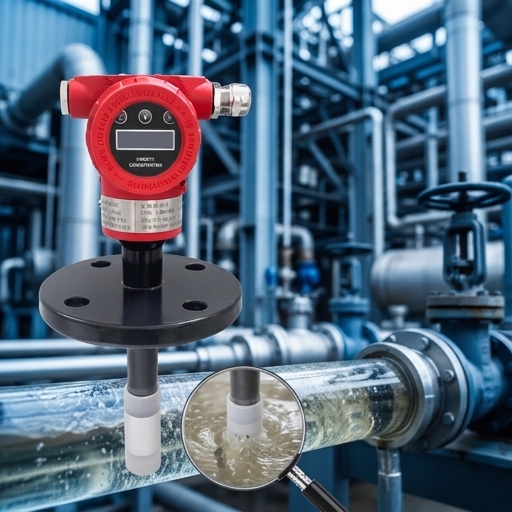
Shenzhen, Guangdong Sep 13, 2026 (Issuewire.com) - Walk into any modern refinery, chemical plant, or food factory and you will find the same instruments doing different jobs. A density meter measures crude oil quality in one building and sugar syrup concentration two hundred kilometers away. A viscometer watches polymer viscosity in one plant and chocolate texture in another. The hardware is similar; the role it plays in each industry is not.
This overview looks at how three major industries use online density, viscosity, and concentration meters -- where the instruments sit in the process, what the operators are actually controlling, and what each industry demands differently from the same technology.
If you specify instruments across multiple plants, the takeaways at the end -- the differences in accuracy philosophy, material selection, and calibration culture -- are the part worth keeping.
Refineries: density as a custody and quality gate
A refinery moves a continuous stream of fluids whose commercial value depends on properties the operator cannot see. Density is the workhorse measurement because it correlates with product quality, blending ratios, and custody transfer quantities.
Where the meters sit:
Crude desalting. Density monitors crude quality at the inlet and wash water efficiency in the desalter. A density change signals a crude slate change, which changes the entire unit operating point.
Atmospheric and vacuum distillation. Side-draw density meters track cut quality continuously. Operators trim draw rates to keep each product within spec -- naphtha, kerosene, diesel, and residue are separated by boiling range, and density tracks that separation.
Blending. Inline density meters at the blender header verify that the finished gasoline or diesel meets the density specification before it leaves the battery limit. Coriolis meters with density output are common at custody transfer points.
Product pipelines. Multi-product pipelines use density meters to detect interface between different products moving in sequence (e.g., gasoline followed by diesel). The meter tells the dispatcher when to switch tanks.
What refineries demand: certified hazardous area instruments (ATEX/IECEx Zone 1, gas group IIB for refinery hydrocarbons, IIC where hydrogen is present), density referenced to 15°C per API standards, and calibration culture tied to fiscal measurement. A custody transfer meter is verified against reference standards on a fixed schedule, because the reading is money.
Chemical plants: concentration as a reaction and product gate
Chemical plants measure concentration because chemistry is stoichiometric -- the reaction needs the right amount of each component, and the product must leave at the specified strength. Concentration meters convert a physical property reading into the chemical quantity the process engineer thinks in.
Where the meters sit:
Acid and alkali production. Sulfuric acid concentration is measured at the absorber outlet and in dilution stations. NaOH concentration is tracked during electrolysis and evaporation. Density-based meters with acid conversion tables are standard, with Hastelloy wetted parts for acid service.
Reaction feed control. Feed concentration is measured inline before the reactor. A feed concentration drift of 1% can change conversion by several percent in sensitive reactions. Continuous measurement catches drift that batch sampling misses between lab rounds.
Solvent recovery and recycling. Distillation columns recovering solvents monitor product and bottoms composition via density or refractive index. The meter closes the loop on column operation.
What chemical plants demand: material compatibility above all -- the wetted materials must survive the specific acid, alkali, or solvent. Temperature compensation is critical because many reactions run hot. Multi-component awareness is essential: if two solutes are present, a single density reading may be ambiguous, and plants add a second parameter (conductivity) to resolve it.
Food factories: Brix, texture and consistency as product identity
In food, the measurement often defines the product. A soft drink is legally defined by its Brix. Chocolate is defined by its viscosity at the enrobing temperature. The meter does not just monitor quality -- it is the instrument that ensures every batch matches the product standard.
Where the meters sit:
Beverage blending. Inline refractometers and density meters verify Brix before carbonation and filling. Sugar, HFCS, and juice solids are tracked continuously so that every filled bottle matches the label claim.
Evaporators. Tomato paste, milk concentrate, and juice concentrates are boiled down to a target solids level. Inline density or Brix measurement at the evaporator outlet tells the operator when the target is reached -- saving energy by avoiding over-evaporation.
Confectionery and dairy. Viscometers monitor chocolate tempering and dairy product consistency. The viscosity reading correlates directly with mouthfeel -- the sensory property consumers judge.
What food factories demand: sanitary design -- 3A or EHEDG compliance, wetted parts in 316L or electropolished materials with Ra 0.8 µm, and CIP/SIP compatibility so the instrument survives daily cleaning cycles. The conversion table must match the actual sweetener or product (HFCS is not sucrose). Accuracy philosophy is different: repeatability and batch consistency matter more than absolute traceability, because the standard is the product spec, not a fiscal measurement.
One technology, three operating cultures
The same tuning fork density meter behaves differently in each industry --
not because the physics changes, but because what the operator does with the
reading changes:
In a refinery, the density reading flows into a custody transfer calculation.
Traceability is everything. The calibration schedule is fixed by fiscal rules.
In a chemical plant, the reading feeds a concentration calculation and a
reaction control loop. Material survival and compensation accuracy matter.
In a food factory, the reading becomes a product identity number on a label.
Repeatability and sanitary design matter. The same meter, three different
success criteria.
When you buy across industries, buy the options, not the base model --
certification, material, and table options are what adapt one platform to all three.
Choosing the right platform when you operate across industries
Many engineering groups manage multiple plants across these industries and prefer to standardize on one instrument platform to simplify spares, training, and documentation. Standardization is sound -- provided the platform is selected for the most demanding requirement in each dimension, not the average:
Certification: select for Zone 1 / IIC so the same model can go into refinery hydrogen service and chemical plant areas without a second SKU.
Materials: select for the most aggressive chemical service (Hastelloy) and use it across plants, accepting a modest cost premium over 316L in benign services.
Sanitary: if any food plant is in the group, select the sanitary process connection option from the start -- retrofitting sanitary design later is expensive.
Tables and outputs: confirm the instrument can store multiple conversion tables and switch by tag or recipe, and offers the output protocols used across the group (4-20 mA + HART, Modbus RTU).
This "select for the maximum" approach reduces SKU count, spare parts inventory, and training burden across the group -- hile keeping every plant compliant.
LONNMETER across the three industries
The LONN-DN100 tuning fork density meter and LONN700 series are deployed across all three industries, in configurations adapted per service: ATEX/IECEx Zone 1 versions in refineries, Hastelloy wetted versions in chemical acid service, and sanitary 3A-compliant versions in food plants. The same electronics platform stores multiple conversion tables -- API density functions for refinery products, acid and alkali tables for chemicals, ICUMSA Brix and HFCS tables for food.
If you are standardizing a process meter platform across plants in more than one of these industries, send us the seven-point specification for each plant. We will confirm whether one configuration covers all of them, or where the configurations need to diverge.
Common questions about cross-industry process measurement
Why do refineries report density at 15°C while food uses 20°C?
Historical standards from the governing bodies. API (petroleum) standardized on 15°C for density reporting and volume correction, matching the old 60°F convention. ICUMSA and most food standards use 20°C. Both are valid reference temperatures -- what matters is that the instrument, the conversion table, and the lab measurement all use the same one. Mixing 15°C and 20°C references creates errors of several tenths of a percent in derived quantities.
Can one density meter really serve refinery, chemical, and food applications?
Yes, if it is configured with the right options. The core density measurement physics is identical. The differences are in certification (hazardous area), wetted materials (corrosion resistance), process connections (sanitary), and conversion tables. A platform with modular options can cover all three. Confirm each option with the vendor before ordering -- a base model without the right options will not serve all three.
Why is repeatability emphasized in food but traceability in refining?
Because the commercial consequence of error differs. In food, the product standard is internal -- the meter keeps every batch consistent with the established product profile, so repeatability (batch-to-batch consistency) directly protects brand quality. In refining, product transfers between companies and tax authorities are settled on measured quantities, so the measurement must be traceable to national standards -- absolute accuracy is a legal requirement. Match the measurement philosophy to the commercial context.
What are the biggest cross-industry specification mistakes?
Three recur: (1) Buying a sanitary-certified instrument for a refinery service where ATEX is required -- or vice versa; (2) using a 316L instrument in chemical acid service where Hastelloy is required, discovered when the sensor fails within months; (3) assuming a single conversion table covers all products -- an instrument loaded only with the sucrose Brix table cannot measure HFCS correctly. Write the seven-point specification per plant before standardizing.
How should calibration frequency differ across these industries?
Refinery fiscal meters: verify against reference standards quarterly, full calibration annually, driven by custody transfer requirements. Chemical plant process meters: verify monthly against lab samples, recalibrate after any process upset or sensor cleaning. Food plant meters: verify monthly against lab Brix or viscosity, calibrate after CIP chemical exposure checks, and always after sensor/prism cleaning. In every industry, let observed drift set the practical interval -- tighten it if drift is growing, relax it if the meter holds calibration.
Source :SHENZHEN LONNMETER GROUP
This article was originally published by IssueWire. Read the original article here.
More News

Intrepid Travel offers agents exclusives this Black Friday
Intrepid Travel, the world’s largest adventure travel company, has announced its Black Friday sale with an agent exclusive offer and incentive. The 20% agent-exclusive discount applies to a selection of new bookings made between 27 October 2026 and 3 November 2026, with departures up to the end of September 2027. In addition, agents can earn £20 per booking on all trips booked in the month of November and with departures to the end of December 2027.

Three in Four Travellers Say Sustainability Matters
Three in four travellers (75.4%) say sustainability is important when making travel decisions, and 56.8% now intentionally choose more sustainable options, according to Trip.com Group’s 2026 Sustainable Travel Consumer Report. To make those choices easier to see and act on, Trip.com Group, a leading global travel service provider, is introducing My Travel Impact, a new feature in the Trip.com app that brings travellers’ more sustainable choices across hotels, flights and rail together in one place.

OUTRIGGER Khao Lak Beach Resort’s Khao Lak-Born General Manager Brings Local Insight
When Sujittra Rongmuang welcomes guests to OUTRIGGER Khao Lak Beach Resort, she is welcoming them to her hometown. The General Manager grew up in Khao Lak and now leads a beachfront resort on Bangsak Beach, where many of her colleagues also come from Khao Lak and the surrounding communities. When guests ask where to eat, what to visit beyond the beach or where to surf, the OUTRIGGER hosts answer from years of firsthand experience.

LOT and Thai Airways Plan Codeshare for Warsaw-Bangkok
The Star Alliance partners have signed an MoU covering selected routes across Europe, Asia and Oceania, with first codeshare journeys eyed for summer 2027 The post LOT and Thai Airways Plan Codeshare for Warsaw-Bangkok appeared first on Business Traveller.

Sofitel Legend and UNESCO join forces to act for the preservation of cultural heritage
Sofitel Legend and UNESCO today announced a global partnership designed to place cultural heritage preservation at the heart of the travel experience. Through this collaboration, both organizations are committed to raising awareness of local know-how, safeguarding living heritage, and fostering deeper connections between travelers and the cultural identities of the destinations they visit. Together, they aim to transform travel into an act of preservation and transmission of cultural heritage.

Discover the 'blissfully quiet' side to this stunning European city - with CHEAP holidays and short flights from the UK
Travel expert Kate Wickers visits Bruges and finds out why the pretty city is perfect for a weekend break, plus accommodation for all budgets.

CHEVAL BLANC COURCHEVEL UNVEILS TWO NEW CHALETS
Cheval Blanc Courchevel is expanding with two chalets conceived as private residences, offering all the services of Cheval Blanc, alongside 15 dedicated Majordomes providing highly personalised service. The five-bedroom Chalet and nine-bedroom Chalet harmoniously retain the architectural codes of the original Maison, while reinterpreting them through a refined, contemporary aesthetic. Their connection to the main property is immediately recognisable through the ochre colour of the exterior walls — the signature shade of Cheval Blanc Courchevel — as well as the extensive use of wood. A nod to the traditional alpine chalets of the region, the material is used across the façade in a contemporary interpretation of local architectural codes: charred timber elements interlock with one another like a piece of modern marquetry.

15 years of the ITB Buyers Circle
Forging relevant contacts, strengthening international partnerships and securing successful business deals: this is what the ITB Buyers Circle has stood for over the past 15 years as an exclusive platform within the World’s Leading Travel Trade Show. In 2027, around 1,300 top buyers with significant purchasing and budget responsibility will once again have the opportunity to join the exclusive network at ITB Berlin, which will take place in mid-March for the first time, from 16 to 18 March. Admission is subject to a successful application. The aim is to bring together leading market players from the leisure, business travel and MICE sectors and encourage dialogue on the latest industry developments and innovations.

Carnival Corporation highlights stronger Bonaire cruise outlook for 2027
Carnival Corporation, the world’s largest cruise company, highlighted an outlook for increased cruise activity in Bonaire in 2027, reinforcing the island’s importance within its southern Caribbean itineraries. Marie McKenzie, senior vice president of government and destination affairs for Carnival Corporation, shared the outlook during her presentation, “A Global Fleet, A Local Partner,” at the annual Bonaire Tourism Summit.

Beyond the Capital: The Best Day Trips from Rome by Train
Car hire allows travellers to explore the hill towns and rural beauty of Italy, but city destinations invite a different set of dilemmas The post Beyond the Capital: The Best Day Trips from Rome by Train appeared first on Business Traveller.

Michelin took away Sézanne’s 3 stars. Why is new head chef Steve Lancaster so glad?
The shiro amadai (white tilefish) served at Sézanne in Tokyo’s Marunouchi district never see the auction floor of a fish market. Caught off Himi, a small coastal city in Japan’s Toyama prefecture, the fish are selected before they reach the market and sent directly to the restaurant. There, new executive chef Steve Lancaster ages them, grills them over charcoal and serves them with a fish-based Albufera sauce finished with a touch of foie gras and fermented Okinawan yellow carrot. “Amadai is a...

What living with a severe wheat allergy is like, and how a brisk walk can make it fatal
It all started with a sandwich at 7-Eleven. Ada Cheng Suet-ngan was on holiday in Japan and grabbed a quick bite before rushing to catch a train in Osaka. Suddenly, she felt itchy and sweaty even though it was winter. She took off her jacket and saw rashes over her arm and neck. “I knew something was wrong, so I sat down, drank some water and tried to calm down,” says Cheng, recalling her first serious allergy flare-up in 2019. “I knew the station’s information centre must have an English...
Recommended









YOUR NEWS, OUR NETWORK.
Do you have Great News you want to tell the world?
Be it updates about your business or your community, you can make sure that it’s heard by submitting your story to our network reaching hundreds of news sites across 6 verticals.