
Parenting Algorithm Launches Globally, Bringing Rabi Dasgupta's Framework for Intentional Parenting to Readers Globally
Sep 14, 2026
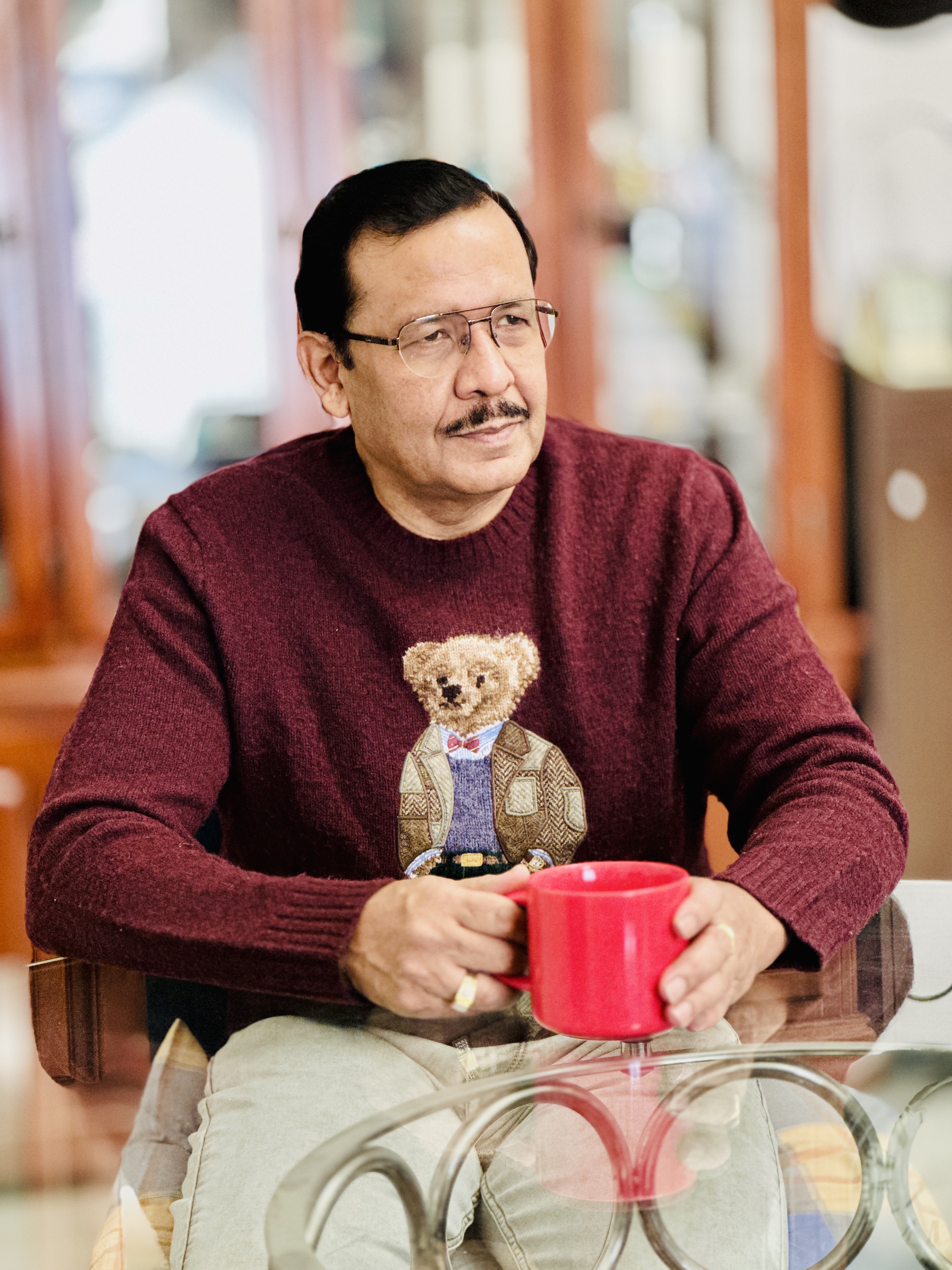
Rabi Dasgupta’s Parenting Algorithm – Nurturing Tomorrow’s Adults enters international markets with a practical framework that looks beyond raising children to the larger responsibility of preparing them for adulthood.
Dubai, United Arab Emirates Sep 14, 2026 (Issuewire.com) - Parenting Algorithm - Nurturing Tomorrow's Adults, authored by Rabi Dasgupta, made its global debut on July 31, 2026. Published by White Falcon Publishing, the book is being made available to readers across more than 50 countries through Amazon marketplaces, Flipkart, and international book-distribution channels.
Its arrival comes at a time when parenting has become both more informed and more complicated. Children are growing up with access to more information, more digital influence and more choices than any generation before them. Yet the fundamental task facing parents has not changed: helping a child develop the judgement, values and capabilities needed to eventually navigate life without constant supervision.
That is the territory Dasgupta explores. Rather than treating parenting as a series of isolated problems to be solved, the book asks readers to consider a longer horizon -- the adult a child is gradually becoming.
From raising children to preparing adults
At the centre of the book is a deceptively simple shift in perspective. Childhood is temporary; adulthood is not. A child who is guided through school, friendships and family life will eventually have to make decisions independently, manage money, build relationships, choose a career, deal with failure and decide what kind of person to be when nobody is directing the next step.
Seen that way, academic achievement becomes only one part of preparation for life. Dasgupta's framework brings together areas such as values, ethics and etiquette, personality development, creative and logical thinking, informal education, hobbies, financial literacy, career guidance and a global outlook.
The point is not to turn childhood into a development programme. It is to make parents conscious of the areas that can easily be left to chance while day-to-day life takes over.
Why call it an algorithm?
The title borrows a word more often associated with technology, but its use is deliberate. An algorithm suggests sequence, structure and progression. Dasgupta applies that idea to parenting as a way of thinking about how parental roles change as children grow.
This is not presented as a formula for producing a particular kind of child. Families differ, children differ, and circumstances change. The structure instead serves as a prompt: what does a child need at this stage, what will matter later, and what should a parent be paying attention to before a gap becomes difficult to correct?
The book gives particular attention to the formative years before sixteen, when the influence of home remains especially significant. Much of that influence is not delivered through formal lessons. It is absorbed through repetition.
The influence children see every day
A parent's response to a disappointing result, the way money is discussed at home, how disagreement is handled, whether an apology is offered after a mistake, or how another person is treated can all communicate something to a child.
That makes parents influential in a way that is different from the creators, celebrities, and personalities children encounter online. Digital influence may be vast, but parental influence is close, repeated, and woven into ordinary life.
One of the book's strongest ideas is that children do not learn values only when adults speak about values. They also learn from watching adults make choices.
Parenting in a world shaped by screens
The digital environment gives this conversation new urgency. Recommendation systems, social feeds, games, short-form video, and online communities increasingly shape what young people encounter and how quickly they encounter it.
Parenting Algorithm does not treat technology as an enemy that can simply be removed from childhood. Its emphasis is on presence. A child's online life is still part of the environment in which that child is developing, and parental engagement cannot stop at the edge of a screen.
For families, that means moving the conversation beyond the number of hours spent online. What children are consuming, how they interpret it, whom they trust, and what behaviours are being normalised can matter just as much.
Development beyond the report card
The book also challenges the tendency to use academic performance as the dominant measure of whether a child is doing well.
An excellent report card cannot, by itself, show whether a young person understands money, can reason through a difficult decision, has developed interests beyond formal education, can communicate across cultures or knows how to respond when a carefully made plan fails.
Schools, tutors, coaches and specialists can support many of these areas. Dasgupta nevertheless draws a useful distinction between delegating an activity and delegating responsibility. Parents may seek expert help, but they still have to notice whether an experience is genuinely helping the child grow or simply filling another slot in the calendar.
Built to be used, not simply read
The presentation of Parenting Algorithm - Nurturing Tomorrow's Adults reflects that practical intent. The full-colour book uses illustrations, diagrams and visual explanations rather than relying only on long blocks of conventional text.
That matters because parenting questions rarely arrive in a neat sequence. They surface in the middle of a disagreement, a school transition, a difficult decision or an unexpected conversation. A resource that can be revisited by topic has a different role from a book designed to be read once from cover to cover.
A global launch for a universal conversation
The July 31 launch takes the book into an international setting. Parenting practices differ widely across countries and cultures, but the underlying responsibility of preparing children for adult life crosses those boundaries.
That adult life is also becoming increasingly international. Children growing up today may study in one country, work with colleagues across several others, and build careers in industries that barely exist at the beginning of their education. Financial awareness, independent thinking, adaptability and a genuine global outlook therefore sit alongside traditional measures of development.
Making the book available across more than 50 countries gives Dasgupta's framework a broader audience, but it also reinforces the central idea behind it: the future may be global, while much of the preparation for it still begins at home.
Intentional, not perfect
Despite the structured language of its title, the book does not ask parents to become flawless. No framework can anticipate every situation, and no parent can control every influence a child encounters.
What parents can control more deliberately is the attention they bring to their own role.
That is ultimately the proposition behind Parenting Algorithm: parenting does not need to become mechanical to become more intentional. The everyday choices made at home -- often the ones that feel too small to matter -- can accumulate into the habits, expectations and values a child carries forward.
With its global launch on July 31, 2026, Parenting Algorithm - Nurturing Tomorrow's Adults brings that conversation to readers across borders and asks a question that is difficult to dismiss: if childhood is where tomorrow's adults begin taking shape, how deliberately are we preparing them for the life that follows?
About the Book
Parenting Algorithm - Nurturing Tomorrow's Adults is authored by Rabi Dasgupta and published by White Falcon Publishing. The book presents a structured perspective on holistic child development, including values, ethics and etiquette, personality development, creative and logical thinking, informal education, hobbies, financial literacy, career guidance, digital engagement and global outlook. Its full-colour format uses illustrations, diagrams and visual explanations to make the ideas easier to navigate and revisit.
To know more about the book visit: https://store.whitefalconpublishing.com/products/parenting-algorithm-nurturing-tomorrow-s-adults?_pos=1&_sid=9b8efccbb&_ss=r
Source :Parenting Algorithm – Nurturing Tomorrow’s Adults
This article was originally published by IssueWire. Read the original article here.
More News

How the Shaw Prize in Computer Science has been created
Since the Shaw Prize was first presented in 2004, the prestigious annual awards have been presented in three categories: astronomy, life science and medicine, and mathematical sciences. A fourth category – computer science – was announced earlier this year in a move that is fully in keeping with the original vision of Run Run Shaw, the late Hong Kong film mogul and legendary philanthropist, who set everything in motion. His intention was to recognise the quest for knowledge and honour...

“I WILL NEVER SET FOOT IN THAT TOWN AGAIN”: 76 Places Around The World People Recommend You Never, Ever, Ever Visit
"Overall, it was a really strange place, in a way that makes the pit of your stomach tense up, and makes you want to run away." View Entire Post ›

Style Edit: 45R’s new knits spotlight texture and Japanese craftsmanship
The appeal of a good knit is often immediate, from the softness against the skin to the reassuring volume and warmth. At 45R, those qualities begin well before a garment takes shape. The Japanese label’s latest selection puts the making process in focus, bringing together airy merino, characterful Shetland wool and the flecked textures of Donegal tweed. Founded in Tokyo in 1977, 45R approaches clothing through monozukuri, or the “art of making”, a philosophy centred on respect for craft and...

If You Love Everything About Traveling Except The Actual Travel Part, Check Out These 28 Things
Sitting in a plane for hours isn't so bad when you're kicking your feet up on this inflatable foot rest. View Entire Post ›

Suit linings: the link between the NFL draft and London’s Savile Row
Back in April, suit jackets lined with interesting graphics and prints emerged as one of the more unusual fashion trends at the 2026 NFL draft in Pittsburgh, Pennsylvania, the annual event where professional American football teams pick out the best young players looking to enter the league. Colton Hood, then a Tennessee cornerback, now on the New York Giants’ roster, rocked up in a cobalt-blue jacket that, when opened, revealed a swathe of family photographs across the lining, chronicling his...

"Yes, It Is Weird As F*ck": 29 Americans Are Sharing What "Reverse Culture Shocks": They Faced After Moving Back Home From Abroad, And It Just Shows How The US Is Not The Best
"Something I didn't miss when I was abroad was the tipping culture in the United States. Here, tipping is expected everywhere for everything." View Entire Post ›
O3’s Luca Yang hated studying. So he built 24/7 study cafes to motivate people like him
At 22, Luca Yang was running a small teaching company in New Zealand after quitting a six-figure finance job that he hated. It had humble beginnings, where he tutored English online for A$25 (US$17.55) per hour just to get by. When one of his students got into Oxford, word spread: one student became 50, then 500. By most measures, he had already won the start-up lottery. “It was producing a lot of money, but it wasn’t something I actually loved doing,” says Yang, who was born and raised in...

Meet Barbera Thornhill, Trump’s anti-trafficking ambassador, going viral for her ‘Maga face’
After Katie Zacharia was sacked as the White House press secretary amid questions about her legal qualifications, another newly appointed Trump official is going viral. Barbera Thornhill is US President Donald Trump’s new Ambassador-at-Large to Monitor and Combat Trafficking in Persons. State Department official Riley Barnes shared the 78-year-old’s portrait on X to celebrate her appointment, but the post gained traction for all the wrong reasons. Social media users tore into Thornhill’s...

This Manchester Hotel Has A Whimsical, Storybook-Like Suite That Made Me Feel Like A Kid Again
...The restaurant Sister Moon is another story. View Entire Post ›

28 Travel Products That Are Worth The Extra Space If You’re Traveling With Kiddos
Because keeping your kids happy is over half the vacay battle, and YOU CAME TO WIN with these finds on your side. View Entire Post ›

46 Travel Products That Just Make Sense To Buy If You’re Going On Multiple Trips Before The Year Ends
Whether you're traveling near or far or in between, you definitely need this foldable 3-in-1 charger and these holy grail travel pants as your copilots. View Entire Post ›

I Spent 5 Days In One Of America's Most Overlooked Places, And I Think I Found My New Favorite Place On Earth
If you know, you really know. View Entire Post ›
Recommended








YOUR NEWS, OUR NETWORK.
Do you have Great News you want to tell the world?
Be it updates about your business or your community, you can make sure that it’s heard by submitting your story to our network reaching hundreds of news sites across 6 verticals.