
Sanku Maots'Ai Analyzes the Top 10 Global Restaurant Brands and Emerging Dining Trends
Sep 24, 2026
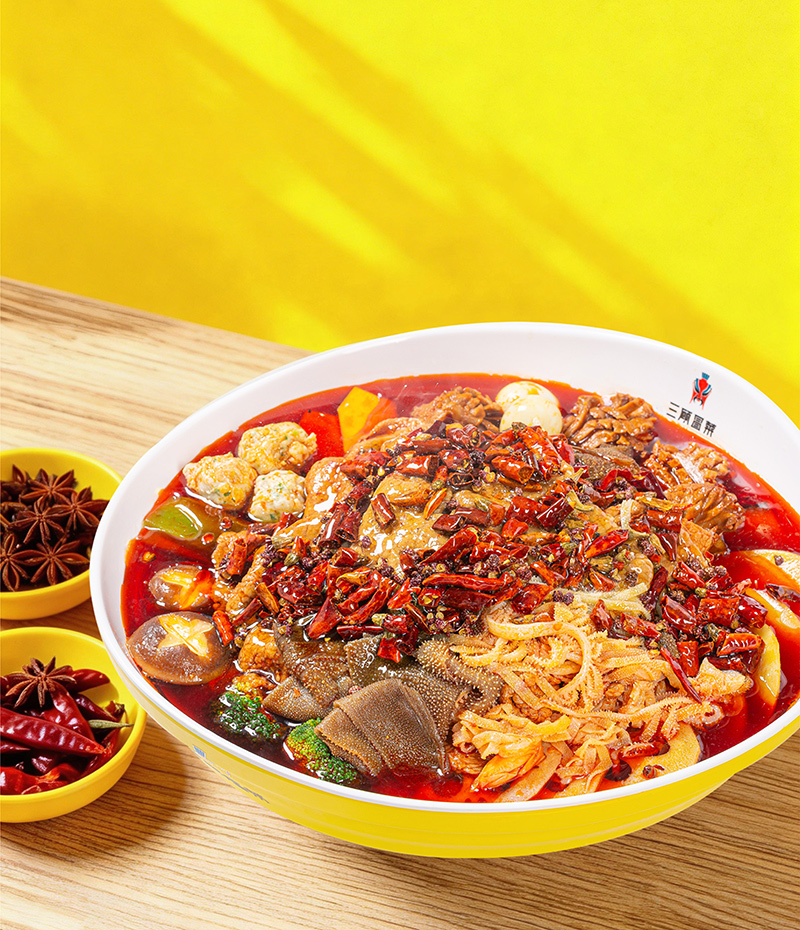
Chengdu, Sichuan Sep 23, 2026 (Issuewire.com) - The Top 10 Global Restaurant Brands continue to attract attention as international dining markets evolve around changing consumer preferences, standardized operations and the growing cross-border influence of regional cuisines. Against this broader industry backdrop, SANKU MAOTS'AI is examining how restaurant brands can develop from local culinary concepts into internationally recognized dining businesses, with Chinese hot pot emerging as one example of how distinctive food culture can reach consumers across different markets.
Global Restaurant Brands Reflect a Changing Dining Landscape
The development of global restaurant brands is increasingly connected to more than the popularity of individual dishes. Standardized operations, consistent product quality, supply-chain capabilities, menu innovation and cultural adaptability can all influence how a restaurant concept performs across different markets.
For Chinese restaurant brands, international expansion also presents an opportunity to introduce regional culinary traditions to consumers unfamiliar with their original cultural context. Hot pot, in particular, provides a flexible dining format in which ingredients can be combined with different broths, sauces and cooking styles.
SANKU MAOTS'AI positions its brand development around this combination of culinary heritage and standardized modern operations. Founded in 2008, the company describes itself as a pioneer in standardized hot pot chain development and has expanded its network to more than 4,000 stores worldwide.
Its international footprint now extends across more than 20 countries and regions, including Germany, the United States, Australia and Japan. The company's stated mission is to promote Chinese culinary culture and support the globalization of Chinese cuisine.
What Defines the Top 10 Global Restaurant Brands?
While global restaurant brands differ considerably in cuisine and business model, several characteristics have become increasingly relevant to international restaurant development.
One is the ability to maintain recognizable flavors across different locations. As a restaurant network expands, maintaining consistency becomes more complicated because ingredients, personnel and operating environments may vary from market to market.
Another factor is supply-chain infrastructure. A scalable restaurant model requires reliable sourcing, standardized ingredients and production processes that can support multiple locations without significantly changing the customer experience.
Menu adaptability is another consideration. Global consumers may have different preferences regarding spice levels, ingredients and flavor profiles. Restaurant brands therefore need to balance the preservation of signature culinary characteristics with product development that responds to local and international tastes.
These factors help explain why the global restaurant industry increasingly combines culinary creativity with manufacturing, logistics, quality control and standardized operational systems.
SANKU MAOTS'AI Builds Its Brand Around Three Pioneering Approaches
SANKU MAOTS'AI describes its development around three pioneering areas: hot pot brand development, a fully owned supply chain and signature products.
The company states that it established the industry's first standardized franchise chain in its category. It also invested RMB 200 million in a 22,000-square-meter smart factory, creating an integrated production foundation designed to support its growing restaurant network.
The company's factory capabilities are intended to address the challenge of maintaining consistent flavors across a large number of locations. According to the company, the factory system is designed to achieve zero deviation in quality and reduce base ingredient and manpower costs by 25%.
This approach illustrates how modern restaurant brands can increasingly depend on industrial infrastructure behind the dining experience. For international restaurant networks, a centralized and standardized supply chain can become an important part of maintaining brand consistency.
Signature Sichuan Flavors Support International Brand Development
Cuisine remains at the center of any restaurant brand, and SANKU MAOTS'AI places traditional Sichuan flavors at the core of its menu strategy.
The brand highlights signature spicy hot pot alongside other products, including Signature Red Chili Oil Boiled Chicken and Uncle Liu's Beef. The company states that approximately 275,000 kilograms of Uncle Liu's Beef are sold annually.
Its product range also includes several broth and flavor options designed around different taste preferences. These include Spicy Hot Pot, Sweet and Sour Spicy Hot Pot, Sweet and Sour Tomato Flavor, Mountain Delicacies and Mushroom Broth, Ginger-Lemon Broth, Traditional Hot Pot with Beef Fat and Classic Sichuan Flavor.
The range demonstrates how a recognizable culinary identity can coexist with product diversification. Rather than relying on a single flavor profile, the menu incorporates both classic Sichuan characteristics and alternative flavor directions.
Secret Recipes and Food Technology Work Together
Preserving traditional flavor while supporting large-scale restaurant operations presents a particular challenge for global food brands. SANKU MAOTS'AI highlights an exclusive secret sauce made from a combination of Chinese herbs and spices, with a classic recipe that the company states has remained unchanged for 18 years.
At the same time, the company has established a dedicated smart factory and testing center. The facility is equipped with testing instruments including gas chromatographs and high-performance liquid chromatographs, supporting its stated approach to food safety and quality assurance.
This combination of traditional recipes and modern manufacturing infrastructure represents one approach to scaling a regional culinary concept. Traditional flavor provides the cultural identity, while standardized production helps reproduce that identity across a larger restaurant network.
Product Innovation Becomes Part of Global Expansion
Restaurant brands operating internationally also face changing consumer expectations. Familiar signature dishes remain important, but new flavor combinations can help brands address different market preferences.
SANKU MAOTS'AI states that its professional seasoning R&D engineers and culinary masters work together on product development. The team focuses on reproducing classic flavors while also developing new taste concepts.
This product-development model allows the company to maintain a connection with Sichuan culinary traditions while exploring flavors such as sweet and sour tomato, ginger-lemon and mushroom-based broths.
For international restaurant brands, such innovation can provide a way to introduce consumers to a distinctive culinary tradition without limiting the dining experience to a single traditional flavor profile.
From Chinese Culinary Heritage to Global Markets
SANKU MAOTS'AI's brand story is rooted in Chinese culinary heritage and the cultural history associated with the Three Kingdoms period. The company connects the name "SANKU" with the spirit of pioneering and breaking new ground.
Since its establishment in 2008, the company reports that more than 4,000 stores have opened worldwide and that its network now reaches more than 20 countries and regions. The company also states that its restaurants serve more than 530 million customers annually.
Its global branch network includes locations in Japan, New Zealand, Germany, Denmark, the United States and Spain, alongside branches in Chinese cities including Chongqing, Chengdu and Xi'an.
This geographic expansion reflects a broader development in the international restaurant market, where regional Chinese cuisines are increasingly being presented through standardized brand models.
The Future of Global Restaurant Brands
The evolution of the Top 10 Global Restaurant Brands is likely to remain connected to several parallel trends, including internationalization, supply-chain modernization, menu diversification and the preservation of culinary identity.
For Chinese restaurant brands expanding overseas, the challenge involves translating local culinary traditions into experiences that can be consistently delivered across different markets. This requires more than opening additional restaurants. It can also involve standardized ingredients, centralized production, food safety systems, product R&D and a clear brand identity.
SANKU MAOTS'AI's development illustrates this approach through its combination of Sichuan-inspired flavors, signature dishes, a 22,000-square-meter smart factory and an international restaurant network.
As Chinese cuisine continues to gain international exposure, the development of restaurant brands such as SANKU MAOTS'AI provides an example of how traditional flavors can be supported by modern supply-chain and production capabilities. The combination of culinary heritage, standardized operations and product innovation is becoming increasingly relevant to the global restaurant industry.
For more information about SANKU MAOTS'AI and its products and global development, visit:https://www.sankuglobal.com/
Source :Sichuan Sanku Maots'ai Brand Management Co., Ltd.
This article was originally published by IssueWire. Read the original article here.
More News

TOURISM IS GROWING - THE CHOICES MADE NOW WILL SHAPE ITS FUTURE
Global tourism is entering a new era of strategic choices. The industry is still generating economic growth, but geopolitical instability, climate pressures, investment challenges and technological disruption are testing its long-term competitiveness. The numbers reveal a paradox. According to the World Economic Forum’s Travel & Tourism Development Index 2026, 92% of the 110 economies assessed have improved their conditions for tourism development since 2024. The World Travel & Tourism Council (WTTC) forecasts a US$12 trillion contribution to the global economy in 2026, supporting around 376 million jobs.

Stand-up comedian Jordan Leung on moving to the US and Hong Kong show backlash
“I think about quitting all the time,” says Jordan Leung, known to his Instagram followers as @69ranch. As one of Hong Kong’s most prominent stand-up comedians to emerge in recent years, Leung’s pessimism is surprising. “I don’t wanna make social media content,” the 33-year-old admits. “Now I’m just fixated on likes and stuff … I don’t know how much longer I can do this.” Sitting directly across the table from him, it is not always easy to tell when Leung is being sincere or performing his...

32 Products That'll Fix Those Annoying Travel Headaches So You Can Actually Enjoy Your Vacation
There's no need to panic in a random gas station without TP when these handy portable wipes exist. View Entire Post ›

Visit Europe And We'll Guess Your Favorite European Food!
I loveeeee a British breakfast! View Entire Post ›

Scotland’s wild wellness boom, from Gleneagles to Loch Lomond
For a while, the blueprint for a serious wellness trip looked pretty much the same everywhere. A flight to somewhere warm, a resort with a view of jungle or terraced rice paddies, a treatment menu borrowing names from ancient traditions, and enough linen to last a lifetime. Scotland was never really part of that picture. It was the place people went for whisky, castles and rain, not the place they went to reset. Then this summer, Scotland’s men’s football team appeared at their first World Cup...

Do you have empty nest syndrome? 5 signs – and expert ways to cope
If you feel lost or overwhelmed now your children have left the nest, you are far from alone. Many parents experience empty nest syndrome at this time of the year. “Empty nest syndrome isn’t a mental health condition, but a set of feelings or symptoms that parents might feel when all their children have left home,” says Dr Elizabeth Wakeland, consultant, clinical and forensic psychologist at Cygnet Health Care in the UK. “It’s a period of significant life change where parents are trying to...

Torrential rains hit Orange County, send visitors scrambling for cover at Disneyland
A powerful, brief downpour sent Disneyland visitors scrambling for cover Friday night, closed rides and flooded parts of Frontierland as workers tried to clear backed-up drains.

I Don't Travel Without My Rescue Pup, So I Combed The Internet For These 9 Airline-Friendly Carriers
Make your travel plans with your pup a walk in the park. View Entire Post ›

Meet Tom Rhys Harries, star of DC’s body-horror Clayface
With Clayface, DC trades its usual cape-donning heroes for a chilling entry into body-horror cinema. Starring Tom Rhys Harries, the film follows Matt Hagen (played by Harries), a Hollywood star from Gotham whose run-in with a crime boss leaves his face severely disfigured. Desperate to restore himself, Hagen turns to Dr. Caitlyn Corr (Naomi Ackie), whose experimental treatment makes matters worse. So Hagen finds himself on a path from Hollywood’s charming leading man to a Gotham City...

Mt. Waterman ski resort near L.A. relisted for $3.3 million after deal falls through
The historic Mt. Waterman Ski Resort, one of Southern California's steepest ski resorts and only an hour from downtown Los Angeles, was relisted for sale on Wednesday at $3,275,000.

I Spent 5 Days In One Of America's Most Overlooked Places, And I Think I Found My New Favorite Place On Earth
If you know, you really know. View Entire Post ›

Baoji Marathon draws 31,000 runners, highlights ancient culture
From race shirts to finisher medals, the 2026 Baoji Marathon in northwest China's Shaanxi Province brings Baoji's history and culture onto the course.
Recommended









YOUR NEWS, OUR NETWORK.
Do you have Great News you want to tell the world?
Be it updates about your business or your community, you can make sure that it’s heard by submitting your story to our network reaching hundreds of news sites across 6 verticals.