
The Warning Signs Before a Mental Health Crisis, From a Psychologist Who's Spent Nearly Two Decades Responding to Them
Sep 25, 2026
Kissimmee, Florida Sep 24, 2026 (Issuewire.com) - Most people who go through a severe psychological crisis show signs before it happens: changed sleep, withdrawal from routines and relationships, a shift in tone that's easy to write off as a bad week. Recognizing those signs early is at the center of how psychologist Michele Lima Fontes Pinheiro approaches mental health care, built over nearly two decades responding to crises at the front line of Brazil's public health system.
From 2005 to 2020, Pinheiro worked at the Centro de Atenção Psicossocial (CAPS III) in Castanhal, a reference unit within Brazil's public health system for patients in severe or recurring psychological distress, including suicide risk. She holds a degree in Psychology from the Universidade da Amazônia (UNAMA) and has been registered with Brazil's Regional Council of Psychology since 2005 (CRP-10/02105).
"At CAPS III, the first conversation someone has, what we call acolhimento, or intake, often matters as much as anything that follows. It's usually the first time someone puts into words what they've been carrying alone. If you rush that moment, you miss the signs," Pinheiro says.
That same intake fed into what's known in Brazil's public health system as a Projeto Terapêutico Singular, an individualized care plan built around each patient's specific history, rather than a fixed protocol. Much of the point, Pinheiro says, was catching warning signs early enough to avoid hospitalization altogether.
At home, Pinheiro says, the clearest sign is usually a change in routine that's easy to explain away: someone who stops joining meals, drops out of conversations, or quietly gives up an activity they used to care about. "Families often notice something is different long before they can say what it is. The instinct to wait and see is understandable, but it costs time that matters," she says.
Between 2013 and 2016, alongside her work at CAPS III, Pinheiro also served Castanhal's municipal social assistance department, mediating family conflicts as part of the local social-protection network. Much of that work, she says, involved helping a family put into words a problem they had already been living with for months without naming it to anyone outside the household, which is often the real distance between a warning sign and a crisis.
In schools and workplaces, she says the pattern is different: a drop in performance or engagement that gets filed under laziness, a bad mood, or personal problems, rather than looked into further. During nearly two decades of talks and volunteer psychological support for corporate teams on stress management, burnout prevention, and emotional intelligence, Pinheiro says this is the misread she encounters most often.
In primary care and community health settings, where Pinheiro also worked, with the municipal health department of Inhangapi from 2021 to 2024, she says the missed opportunity is often smaller than people expect: a patient mentions feeling overwhelmed or hopeless during an unrelated visit, and the comment doesn't get followed up with a direct question. Part of her work in Inhangapi involved training frontline staff to ask that question and, when needed, refer patients on to specialized care such as CAPS.
Pinheiro traces this way of listening to a psychoanalytic orientation she developed during her specialization in Clinical Psychology, close to what's known as free-floating attention: staying open to what surrounds a complaint, not fixating on the complaint itself. "Someone tells you they're just tired. Fine, but why does the same word keep coming up three different times in the conversation, describing three different things? A complaint about being tired is rarely just about being tired. It's often standing in for something the person hasn't fully articulated yet, and the job is to notice that gap between what's said and what's actually happening," she explains. Recognizing that gap, she adds, is what separates catching a warning sign early from missing it entirely.
Since 2018, Pinheiro has also served as a credentialed forensic psychologist for the Federal Police of the State of Pará, evaluating psychological fitness for firearm licensing, and in 2017 she completed a specialization in Traffic Psychology with the highest possible grade, both roles built on the same underlying skill of reading beyond a first, surface-level answer.
That instinct carries into her corporate work, too. Over nearly two decades, Pinheiro has given talks for companies on subjects including burnout prevention, humanized leadership, and communication to reduce workplace conflict, and has volunteered psychological support directly to corporate teams. The warning signs she looks for in a clinic, she says, tend to show up the same way in a break room; they're just labeled differently.
Since 2016, Pinheiro has also run a private practice, Espaço Psi, treating trauma, grief, and psychosomatic complaints in children, adolescents, and adults. Ongoing therapy, she says, makes warning signs easier to catch than a single encounter does, because a shift away from someone's baseline is more visible to a clinician who already knows what that baseline looks like, which is part of why she tells families and workplaces not to wait for a dramatic change before asking a direct question.
Her advice to non-specialists is to treat the first sign as the real one, not the third. "By the time everyone around a person can see that something is wrong, it usually isn't the first sign; it's just the one that finally couldn't be explained away," she says.
Source :Michele Pinheiro
This article was originally published by IssueWire. Read the original article here.
More News

Do you have empty nest syndrome? 5 signs – and expert ways to cope
If you feel lost or overwhelmed now your children have left the nest, you are far from alone. Many parents experience empty nest syndrome at this time of the year. “Empty nest syndrome isn’t a mental health condition, but a set of feelings or symptoms that parents might feel when all their children have left home,” says Dr Elizabeth Wakeland, consultant, clinical and forensic psychologist at Cygnet Health Care in the UK. “It’s a period of significant life change where parents are trying to...

Torrential rains hit Orange County, send visitors scrambling for cover at Disneyland
A powerful, brief downpour sent Disneyland visitors scrambling for cover Friday night, closed rides and flooded parts of Frontierland as workers tried to clear backed-up drains.

I Don't Travel Without My Rescue Pup, So I Combed The Internet For These 9 Airline-Friendly Carriers
Make your travel plans with your pup a walk in the park. View Entire Post ›

Meet Tom Rhys Harries, star of DC’s body-horror Clayface
With Clayface, DC trades its usual cape-donning heroes for a chilling entry into body-horror cinema. Starring Tom Rhys Harries, the film follows Matt Hagen (played by Harries), a Hollywood star from Gotham whose run-in with a crime boss leaves his face severely disfigured. Desperate to restore himself, Hagen turns to Dr. Caitlyn Corr (Naomi Ackie), whose experimental treatment makes matters worse. So Hagen finds himself on a path from Hollywood’s charming leading man to a Gotham City...
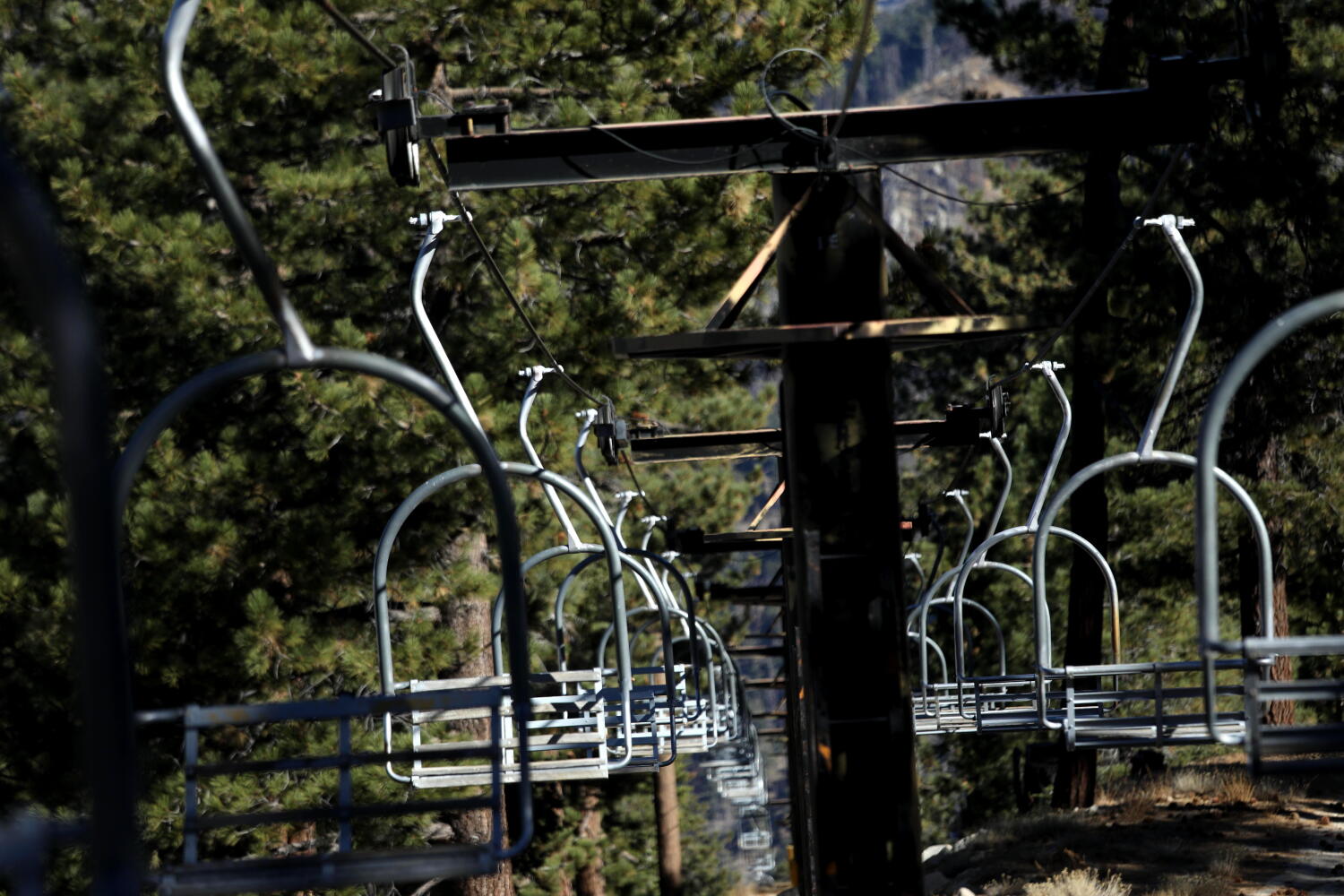
Mt. Waterman ski resort near L.A. relisted for $3.3 million after deal falls through
The historic Mt. Waterman Ski Resort, one of Southern California's steepest ski resorts and only an hour from downtown Los Angeles, was relisted for sale on Wednesday at $3,275,000.

I Spent 5 Days In One Of America's Most Overlooked Places, And I Think I Found My New Favorite Place On Earth
If you know, you really know. View Entire Post ›

Baoji Marathon draws 31,000 runners, highlights ancient culture
From race shirts to finisher medals, the 2026 Baoji Marathon in northwest China's Shaanxi Province brings Baoji's history and culture onto the course.

Who is Kim Jae-young, imposing star of K-dramas Make Me Tingle and The Judge from Hell?
Korean actor Kim Jae-young and his signature locks are back on screen in the currently airing romcom Make Me Tingle, where he takes on the daring role of a sex toy entrepreneur. Since his 2013 acting debut, Kim has played a variety of brooding characters that take advantage of the lithe, imposing frame that helped him start in entertainment as a model. However, Kim was not initially aiming for a career in front of the camera. Rather, he harboured an ambition to be a chef and has said in...

43 Packing Tips So You Can Save That Checked Luggage Fee To Spend On Your Actual Trip
That checked bag? Turns out you won't need it after all. View Entire Post ›

Europe’s most underrated Christmas markets revealed
While Europe’s biggest Christmas markets attract millions of visitors every year, many travellers are seeking lesser-known festive destinations. Travel experts at eShores have revealed five underrated Christmas markets worth adding to this year’s winter travel plans based on their festive charm and growing search interest.

JETOUR Brings Its “Travel+” Ecosystem to Life
For JETOUR, travel means more than discovering new places, it also means respecting and protecting the natural world. As its “Travel+” ecosystem continues to grow, JETOUR is bringing travel, off-road exploration and nature conservation together, encouraging travelers to explore responsibly and help protect the places they visit.

A milestone for La Dolce Vita Orient Express, connecting Rome and Istanbul
La Dolce Vita Orient Express has embarked on its first international journey, departing from Rome Ostiense on 22 October for Istanbul. The five-day, four-night itinerary marks a significant milestone for the train, extending its journeys beyond Italy and bringing together two of Europe’s emblematic destinations through an exceptional travel experience.
Recommended









YOUR NEWS, OUR NETWORK.
Do you have Great News you want to tell the world?
Be it updates about your business or your community, you can make sure that it’s heard by submitting your story to our network reaching hundreds of news sites across 6 verticals.