
WATERTECH CHINA: Shanghai Tongjie as a Top Modular Seawater Desalination System Factory on Off-Grid Solar
Sep 18, 2026
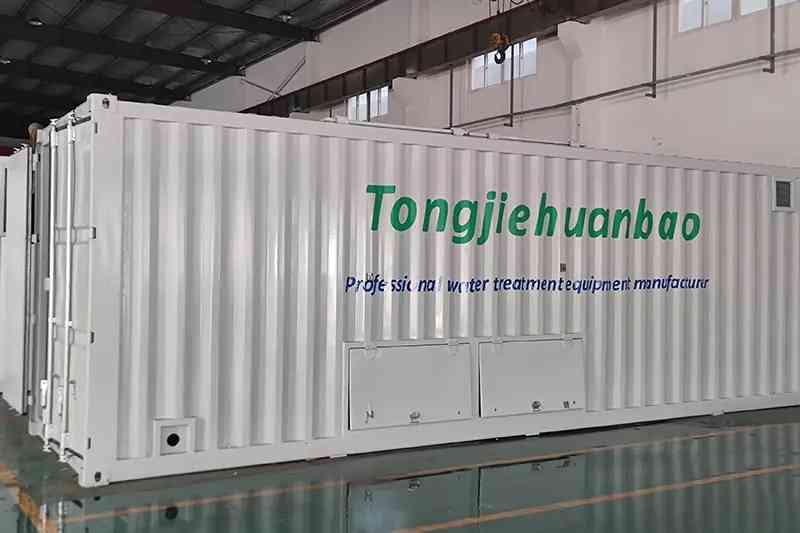
Shanghai, China Sep 17, 2026 (Issuewire.com) - Integrating renewable photovoltaic generation with membrane desalination allows remote coastal facilities, desert outposts, and island microgrids to secure autonomous freshwater without grid access. Across international expos such as WATERTECH CHINA, industrial dialogue frequently evaluates how manufacturers like Shanghai Tongjie engineer a modular seawater desalination system to harmonize intermittent solar power with continuous reverse osmosis separation.
For engineering teams designing off-grid coastal utilities, solar-driven seawater reverse osmosis (SWRO) is fundamentally a power-matching challenge. Success depends on reconciling the fluctuating daily generation curve of a photovoltaic field with the rigorous hydraulic and pressure requirements of membrane desalination.
Why Off-Grid Solar Changes the SWRO Power-Design Brief
Standard industrial SWRO plants operate on stable utility grids where electrical frequency, voltage, and baseload supply remain constant around the clock. Under grid-connected conditions, high-pressure pumps run at steady RPM, maintaining laminar flow, stable trans-membrane pressure (TMP), and constant recovery rates across membrane pressure vessels.
Off-grid solar power fundamentally alters this operating baseline. Solar irradiance follows a diurnal bell curve subject to sudden cloud transients, seasonal solar zenith shifts, and zero generation during night hours. High-pressure SWRO systems cannot simply cycle on and off with passing clouds without risking severe water hammer, membrane delamination, and rapid mineral scaling. If feedwater pressure drops below the natural osmotic pressure of seawater (typically 25 to 30 bar for standard 35,000 ppm TDS seawater), reverse osmosis ceases entirely, and back-diffusion can foul the membrane surface.
Designing a solar-powered modular SWRO facility therefore requires an integrated electrical and hydraulic architecture. The engineering objective shifts from running an uninterrupted 24-hour baseline to synchronizing process output with the available daily solar window while safeguarding the membrane train against sudden electrical dropouts.
Match Daily Water Demand with the Electrical Load Profile
A central principle governs cost-effective off-grid water production: storing treated water in atmospheric tanks is significantly cheaper and more reliable than storing high-voltage electricity in electrochemical battery banks. Oversizing battery energy storage systems (BESS) to support 24/7 continuous high-pressure pumping multiplies project CAPEX, introduces thermal management burdens in tropical or desert climates, and creates long-term battery degradation and replacement cycles.
Instead of running a small SWRO plant 24 hours a day, the preferred engineering strategy sizes the treatment plant to produce the entire 24-hour water quota within the peak 6 to 8 solar hours of each day. For example, if an off-grid coastal community requires 100 cubic meters of potable water per day, rather than installing a 4.2 m³/h unit operating around the clock, the system is designed as a 12.5 to 16.5 m³/h modular unit operating strictly during peak daylight.
The surplus water produced during daylight hours is stored in food-grade atmospheric storage tanks, gravity-feeding the distribution network overnight without consuming electrical power. This approach confines heavy power consumption to peak solar generation periods, minimizing the required battery capacity to a small buffer bank designed only for smoothing high-frequency cloud transients and powering control electronics during shutdown.
How Containerized SWRO Connects PV, Generator, and Energy-Recovery Options
A containerized SWRO module simplifies hybrid microgrid integration by incorporating standard electrical bus interfaces and factory-integrated power conditioning. Standard configurations couple the solar PV field, an optional auxiliary diesel or gas generator, and the internal SWRO motor loads through a common AC bus or a centralized DC microgrid.
Energy recovery devices (ERDs) play an indispensable role in off-grid solar desalination economics. High-pressure reject brine exits standard SWRO vessels at 55 to 65 bar, carrying 55% to 60% of the initial hydraulic energy supplied by the high-pressure pump. Incorporating an isobaric pressure exchanger or hydraulic turbocharger transfers this residual energy directly to incoming feedwater, slashing specific energy consumption from 6.5-8.0 kWh/m³ down to 2.8-3.5 kWh/m³.
In a solar-powered installation, cutting energy consumption per cubic meter by half directly reduces the required photovoltaic array surface area, mounting racking, and inverter capacity by 40% to 50%. This reduction in electrical footprint is often the deciding factor in making solar desalination technically and spatially feasible on land-constrained coastal sites or rocky islands.
Shanghai Tongjie provides integrated engineering support to align containerized SWRO packages with site microgrid configurations. By pre-integrating variable frequency drives (VFDs), harmonic filters, and power transfer switches within the container, the factory delivery eliminates complex field electrical integration, ensuring smooth, synchronized power transitions between direct solar drive and auxiliary generator backup.
Design Operating Continuity Around Variable Power and Remote O&M
Operating continuity in off-grid solar SWRO relies on multi-stage automation and intelligent control logic. Variable frequency drives equipped with soft-start algorithms gradually ramp up pump motors over 60 to 90 seconds, eliminating the severe inrush currents (typically 5 to 7 times nominal current) that would otherwise collapse a solar inverter bus.
When cloud cover reduces solar output below the minimum threshold required for stable high-pressure operation, the central PLC executes an automated graceful ramp-down rather than an abrupt emergency stop. The unit opens automated flush valves, drawing fresh permeate from an onboard tank to thoroughly flush concentrated brine from the membrane housings. Displacing high-salinity seawater with freshwater prevents calcium sulfate and silica scaling on membrane surfaces while the system remains idle overnight.
Because off-grid installations are typically situated in remote, unstaffed locations, the modular system incorporates industrial 4G/5G or satellite IoT communication gateways. The platform continuously monitors operational telemetry:
- Feedwater TDS, temperature, and inlet pressure.
- Inter-stage differential pressure across pre-filtration cartridges and RO vessels.
- Permeate flow rate, recovery percentage, and product water electrical conductivity.
- High-pressure pump vibration, motor winding temperature, and drive status.
If sensor anomalies or gradual membrane fouling are detected, automated alerts notify regional service managers, allowing predictive maintenance visits to be scheduled well before water production is disrupted.
Off-Grid Modular Seawater Desalination FAQ
Integrating solar power with modular SWRO requires evaluating water demand profiles, local solar irradiance, and reserve storage capacity.
Can an SWRO System Run Directly on Solar Without Batteries?
Direct-coupled solar SWRO is technically possible with specialized variable-flow controls, but incorporating a modest electrical buffer or a hybrid backup generator is strongly recommended to protect pumps from rapid cloud-induced brownouts and maintain stable membrane flux.
How Does Energy Recovery Reduce Solar Array Sizing?
Energy recovery recycles high-pressure brine energy to pressurize incoming seawater, cutting pump motor power draw by 40% to 50%. This proportionally decreases the number of solar panels, inverter capacity, and cabling needed to power the system.
What Happens to the RO Membrane During Cloudy Periods?
Brief dips in irradiance are smoothed by capacitor banks, batteries, or auxiliary generator throttling. Extended cloud cover triggers an automated, controlled shutdown accompanied by an automated freshwater flush to prevent scale formation during idle periods.
Why Is Water Storage Preferred Over Oversized Battery Storage?
Constructing insulated or atmospheric water storage tanks incurs a fraction of the capital and maintenance cost of electrochemical batteries, suffers zero cycling degradation, and introduces no hazardous material disposal concerns in remote environments.
What Information Is Needed to Size a Solar-Driven SWRO Package?
Key requirements include daily freshwater consumption, raw seawater TDS and temperature range, site latitude/longitude (solar insolation data), available land area for solar arrays, and preferred backup power sources.
Define Water, Power, and Site Inputs Before Configuration
Configuring an off-grid solar desalination project requires balancing process hydraulics with site-specific electrical generation assets. Treating water production, solar array sizing, and water storage as a single thermodynamic system prevents both undersized power shortfalls and unnecessary capital overspending.
Submit site coordinates, raw seawater analysis, daily water volume targets, and available electrical resources to the Shanghai Tongjie engineering team to calculate project-specific load curves, membrane array configurations, and containerized equipment specifications before procurement.

Media Contact
Shanghai Tongjie Environmental Protection Technology Co., Ltd.
Source :Shanghai Tongjie Environmental Protection Technology Co., Ltd.
This article was originally published by IssueWire. Read the original article here.
More News

The Belgian musician fusing Western, Chinese instruments for ‘something totally different’
Johan Famaey is considered the only professional yangqin player in Belgium. When he returned to Belgium from Qingdao, China, in 2009, most people in his home country had never heard of the instrument and knew little about Chinese culture. The 47-year-old musician, who is primarily a pianist, performs with a yangqin in Belgium and beyond, showcasing both Western and Eastern music traditions in his compositions. “Whether it’s a piano, whether it’s a yangqin, we all have this in common that we try...

27 Fashion Pieces That Reviewers Wore On Vacation And Would Be Perfect For Your Next Trip
✨ "Best travel dress yet!" ✨ "I bought two and wished that I had five." ✨ "I felt both stylish and comfortable throughout my trip." ✨ Safe to say, reviewers LOVE these pieces. View Entire Post ›

Explorer Lucy Shepherd on Expeditions, Obstacles and Travel Essentials
The British explorer is back with a new book and TV show. The post Explorer Lucy Shepherd on Expeditions, Obstacles and Travel Essentials appeared first on Business Traveller.

I Stayed In Crete’s A-List Hideaway, And Now I Understand Why Celebrities Keep Coming Back
From ridiculously clear seas and fresh seafood to historic islands and A-list-approved tranquillity, Elounda has it all. View Entire Post ›

Luxury brands destroy unsold stock to preserve exclusivity. That may soon change
Earlier this month, shoppers on Yoox could snap up suede Brunello Cucinelli trainers for €617 (US$700), around half the price on the brand’s official website. If they felt like pairing them with a beige Gucci miniskirt, that was available for €800, close to 50 per cent off as well. A Burberry T-shirt? The e-commerce website sold one for less than €200, or 60 per cent off its original price. Overall, some 2,500 products from the three labels were available, heavily discounted. It is a sign of the...

Egg freezing is becoming significantly more popular in Canada
Over the last decade, egg freezing has become significantly more popular. According to data from the Canadian Fertility and Andrology Society (CFAS), there were 2,663 retrieval cycles for the purpose of freezing, or banking, eggs reported in 2025. Compare that number to 2013, when there were only 217 such procedures logged.

Japan’s Zentis Osaka offers a restful stay in the bustling Umeda district
Osaka, the third largest city in Japan, lacks the charm of Tokyo or the historic appeal of nearby Kyoto. Home to Kansai International Airport, Osaka is often a jumping-off point for more popular nearby destinations such as Kyoto, Nara and Kanazawa, all a short train ride away. While Osaka is not the typical tourist town with must-visit attractions like temples, shrines and museums, it’s still a great place to hang out and spend a couple of days to enjoy local specialities such as okonomiyaki and...

Experience the Magic of Christmas & New Year in St. Louis
From sparkling light displays and outdoor ice skating to festive dining, Christmas shopping and spectacular New Year celebrations, St. Louis, Missouri, comes alive during the holiday season. Home to an impressive array of free attractions, including the Saint Louis Zoo, Saint Louis Art Museum and Missouri History Museum, the city offers an affordable festive escape for families, couples and friends alike. Whether visitors are looking for magical winter experiences, seasonal entertainment or a festive city break, St. Louis offers plenty of ways to celebrate Christmas and welcome 2027.

Adventure and Wellness Make Georgia a Favourite Getaway for Gulf Travellers
Georgia is becoming a go-to destination for Gulf travellers who want more than a standard city break. Adventure in the mountains and restorative wellness retreats are leading the appeal, helped by short flight times and easy entry. The country recorded 145,513 visits from GCC countries in 2025, a 3.4% increase on the previous year. Momentum was stronger earlier in the year. Visits from Gulf countries reached a record 26,397 in the first half of 2026.

Adventures with no age limit: 12 incredible holidays for 2027
From sailing to the remote islands of French Polynesia and exploring Japan’s ancient Zen traditions to riding a historic steam train through Colorado’s Wild West, some adventures are simply too good to miss, whatever your age. For travellers in their 50s, 60s, 70s and beyond, 2027 offers plenty of opportunities to discover somewhere new, revisit places that hold special memories or finally embark on a long-dreamed-of journey. Whether it’s retracing the footsteps of Elvis Presley in Memphis 50 years after his death, discovering the wild landscapes of Florida’s Everglades or taking the scenic route to the French Alps aboard a sleeper train, these 12 unforgettable holidays prove that a sense of adventure never gets old.

TOURISM IS GROWING - THE CHOICES MADE NOW WILL SHAPE ITS FUTURE
Global tourism is entering a new era of strategic choices. The industry is still generating economic growth, but geopolitical instability, climate pressures, investment challenges and technological disruption are testing its long-term competitiveness. The numbers reveal a paradox. According to the World Economic Forum’s Travel & Tourism Development Index 2026, 92% of the 110 economies assessed have improved their conditions for tourism development since 2024. The World Travel & Tourism Council (WTTC) forecasts a US$12 trillion contribution to the global economy in 2026, supporting around 376 million jobs.

Stand-up comedian Jordan Leung on moving to the US and Hong Kong show backlash
“I think about quitting all the time,” says Jordan Leung, known to his Instagram followers as @69ranch. As one of Hong Kong’s most prominent stand-up comedians to emerge in recent years, Leung’s pessimism is surprising. “I don’t wanna make social media content,” the 33-year-old admits. “Now I’m just fixated on likes and stuff … I don’t know how much longer I can do this.” Sitting directly across the table from him, it is not always easy to tell when Leung is being sincere or performing his...
Recommended








YOUR NEWS, OUR NETWORK.
Do you have Great News you want to tell the world?
Be it updates about your business or your community, you can make sure that it’s heard by submitting your story to our network reaching hundreds of news sites across 6 verticals.