
Why "Just Paperwork" Fails Clients: Jamie Sahagian Makes the Case for Elevating Legal Support Work
Sep 24, 2026
Riviera Beach, Florida Sep 23, 2026 (Issuewire.com) - Legal support work is routinely described, inside and outside the profession, as paperwork: a background task, secondary to the legal argument it accompanies. Jamie Sahagian, a paralegal based in Riviera Beach, Florida, argues that framing is not just inaccurate. It is a significant part of why cases stall.
The Problem with Calling It "Just Paperwork"
"Calling it paperwork," Sahagian says, "is how people talk themselves into not taking it seriously." The word suggests something clerical, interchangeable, easily delegated to whoever has time. In Sahagian's experience across probate, Mental Health Court, and criminal defense casework, the documents involved determine whether a case moves forward or stalls, regardless of how strong the underlying legal position is.
That gap between perception and consequence is, in Sahagian's account, the root of a great deal of avoidable delay. A checklist treated as a formality gets rushed. A deadline treated as flexible gets missed. Neither failure shows up immediately, which is part of why the underlying attitude toward this work rarely gets questioned until a case has already gone sideways.
"Precision isn't an extra step," Sahagian says. "It's the job, and treating it like an afterthought is how cases actually fail." That distinction, between a step that can be rushed and one that cannot, sits at the center of his argument for why the profession's language around legal support needs to change.
A Precision Mindset in a Strategy-Focused Field
"An attorney can be completely right about strategy," Sahagian says, "and still watch a case stall because a checklist sat on someone's desk." The legal profession, in his view, tends to reward the visible parts of a case: the argument, the negotiation, the courtroom performance. It tends to overlook the tracking, documentation, and follow-through that determine whether any of that visible work reaches a judge on schedule.
Sahagian's own caseload illustrates the cost of that imbalance. A probate matter can involve dozens of interdependent deadlines running at once, each connected to the ones before it. A single overlooked date, buried in an otherwise unremarkable week, can ripple through an entire month of scheduled filings across several unrelated cases.
That compounding effect, in Sahagian's view, is what the profession consistently underestimates. A missed deadline is rarely a single, isolated failure. It is usually the first domino in a sequence that costs a case far more time than the original oversight would suggest, precisely because so much of the work downstream depends on it.
Earning the Standing to Make the Case
Sahagian's critique is grounded in a career that has tested the same principle across settings with almost nothing else in common. "I've worked criminal defense, Mental Health Court, and probate," he says. "The thread through all of it was never the legal theory. It was whether the filing was right."
That career began outside law entirely. Sahagian earned a Bachelor of Science in Microbiology and Cell Science from the University of Florida and later managed a transgenic mouse colony at the Max Planck Florida Institute for Neuroscience, work that demanded exact, repeatable protocol and produced research later published in Frontiers in Cellular Neuroscience. He went on to study at the City University of New York School of Law, serving on the CUNY Law Review, before moving into paralegal work supporting criminal defense clients in Queens, New York, then Mental Health Court cases with the Office of the Public Defender in Palm Beach County, and most recently probate and estate administration for a firm in West Palm Beach.
That trajectory, spanning a research lab, a law school, and three separate paralegal roles, is unusual enough to invite the obvious question of what actually held it together. Sahagian's answer is that none of those settings shared subject matter, but all of them shared a court, a lab notebook, or a client waiting on the outcome of work they could not personally verify.
Why Precision Actually Matters
The consequences of treating legal support work as secondary rarely appear right away, which Sahagian believes is exactly why the attitude persists. A deed recorded with a small error still gets accepted at the county level. The problem surfaces years later, when a title search catches an inconsistency nobody flagged the first time.
A missed probate deadline works the same way. It does not cause an immediate crisis. It shows up months afterward, when an estate that should have closed is still open, and the family waiting on it has no clear explanation for why.
Sahagian argues that this delayed timeline is precisely what makes the "just paperwork" framing so persistent. If the cost of carelessness showed up immediately, the industry would have corrected for it long ago. Because it surfaces months or years later, disconnected from the original oversight, the profession rarely draws a direct line between the two.
The Role of Documentation and Trust
Sahagian connects the stakes of precision directly to the people a case is meant to serve. A client facing a Mental Health Court competency evaluation is rarely positioned to track the status of their own filings. A family in the middle of a probate case is rarely tracking court deadlines either.
In both settings, the paperwork functions as the only reliable evidence that a slow-moving system is actually working on someone's behalf. Treating it as an afterthought, in Sahagian's view, does not just create administrative risk. It removes the one mechanism a client or family has for trusting a process they cannot otherwise see into.
That trust, once lost, is difficult to rebuild within the timeline of an active case. A family that discovers a missed deadline partway through a probate matter rarely regains full confidence in the process for the remainder of the case, regardless of how the error gets corrected.
Small, Consistent Actions
Sahagian's alternative to the industry default is neither dramatic nor complicated: a calendar that tracks every deadline across a caseload, a checklist applied identically to every filing, and a standing assumption that a document is wrong until it has been verified. None of it requires new technology or additional staff. It requires treating the existing steps as non-negotiable rather than optional under time pressure.
That discipline, Sahagian notes, is what allowed him to manage a full probate caseload alongside Mental Health Court filings without either one falling behind, since both dockets ran on the same underlying system rather than separate, improvised approaches.
A Call for Change in Legal Support
Sahagian is not arguing that legal strategy does not matter. He is arguing that the profession has drawn the wrong line between what counts as legal skill and what counts as clerical task. "Nobody gets promoted for a deadline that didn't get missed," he says. "That's exactly the problem."
Based in Riviera Beach, Florida, Sahagian continues to apply that standard to his own work across Palm Beach County, arguing that the industry's language around legal support needs to catch up with what the work actually requires. Until that happens, in his view, cases will keep stalling for reasons that were entirely preventable, one overlooked checklist at a time.
Source :Jamie Sahagian
This article was originally published by IssueWire. Read the original article here.
More News

TOURISM IS GROWING - THE CHOICES MADE NOW WILL SHAPE ITS FUTURE
Global tourism is entering a new era of strategic choices. The industry is still generating economic growth, but geopolitical instability, climate pressures, investment challenges and technological disruption are testing its long-term competitiveness. The numbers reveal a paradox. According to the World Economic Forum’s Travel & Tourism Development Index 2026, 92% of the 110 economies assessed have improved their conditions for tourism development since 2024. The World Travel & Tourism Council (WTTC) forecasts a US$12 trillion contribution to the global economy in 2026, supporting around 376 million jobs.

Stand-up comedian Jordan Leung on moving to the US and Hong Kong show backlash
“I think about quitting all the time,” says Jordan Leung, known to his Instagram followers as @69ranch. As one of Hong Kong’s most prominent stand-up comedians to emerge in recent years, Leung’s pessimism is surprising. “I don’t wanna make social media content,” the 33-year-old admits. “Now I’m just fixated on likes and stuff … I don’t know how much longer I can do this.” Sitting directly across the table from him, it is not always easy to tell when Leung is being sincere or performing his...

32 Products That'll Fix Those Annoying Travel Headaches So You Can Actually Enjoy Your Vacation
There's no need to panic in a random gas station without TP when these handy portable wipes exist. View Entire Post ›

Visit Europe And We'll Guess Your Favorite European Food!
I loveeeee a British breakfast! View Entire Post ›

Scotland’s wild wellness boom, from Gleneagles to Loch Lomond
For a while, the blueprint for a serious wellness trip looked pretty much the same everywhere. A flight to somewhere warm, a resort with a view of jungle or terraced rice paddies, a treatment menu borrowing names from ancient traditions, and enough linen to last a lifetime. Scotland was never really part of that picture. It was the place people went for whisky, castles and rain, not the place they went to reset. Then this summer, Scotland’s men’s football team appeared at their first World Cup...

Do you have empty nest syndrome? 5 signs – and expert ways to cope
If you feel lost or overwhelmed now your children have left the nest, you are far from alone. Many parents experience empty nest syndrome at this time of the year. “Empty nest syndrome isn’t a mental health condition, but a set of feelings or symptoms that parents might feel when all their children have left home,” says Dr Elizabeth Wakeland, consultant, clinical and forensic psychologist at Cygnet Health Care in the UK. “It’s a period of significant life change where parents are trying to...

Torrential rains hit Orange County, send visitors scrambling for cover at Disneyland
A powerful, brief downpour sent Disneyland visitors scrambling for cover Friday night, closed rides and flooded parts of Frontierland as workers tried to clear backed-up drains.

I Don't Travel Without My Rescue Pup, So I Combed The Internet For These 9 Airline-Friendly Carriers
Make your travel plans with your pup a walk in the park. View Entire Post ›

Meet Tom Rhys Harries, star of DC’s body-horror Clayface
With Clayface, DC trades its usual cape-donning heroes for a chilling entry into body-horror cinema. Starring Tom Rhys Harries, the film follows Matt Hagen (played by Harries), a Hollywood star from Gotham whose run-in with a crime boss leaves his face severely disfigured. Desperate to restore himself, Hagen turns to Dr. Caitlyn Corr (Naomi Ackie), whose experimental treatment makes matters worse. So Hagen finds himself on a path from Hollywood’s charming leading man to a Gotham City...
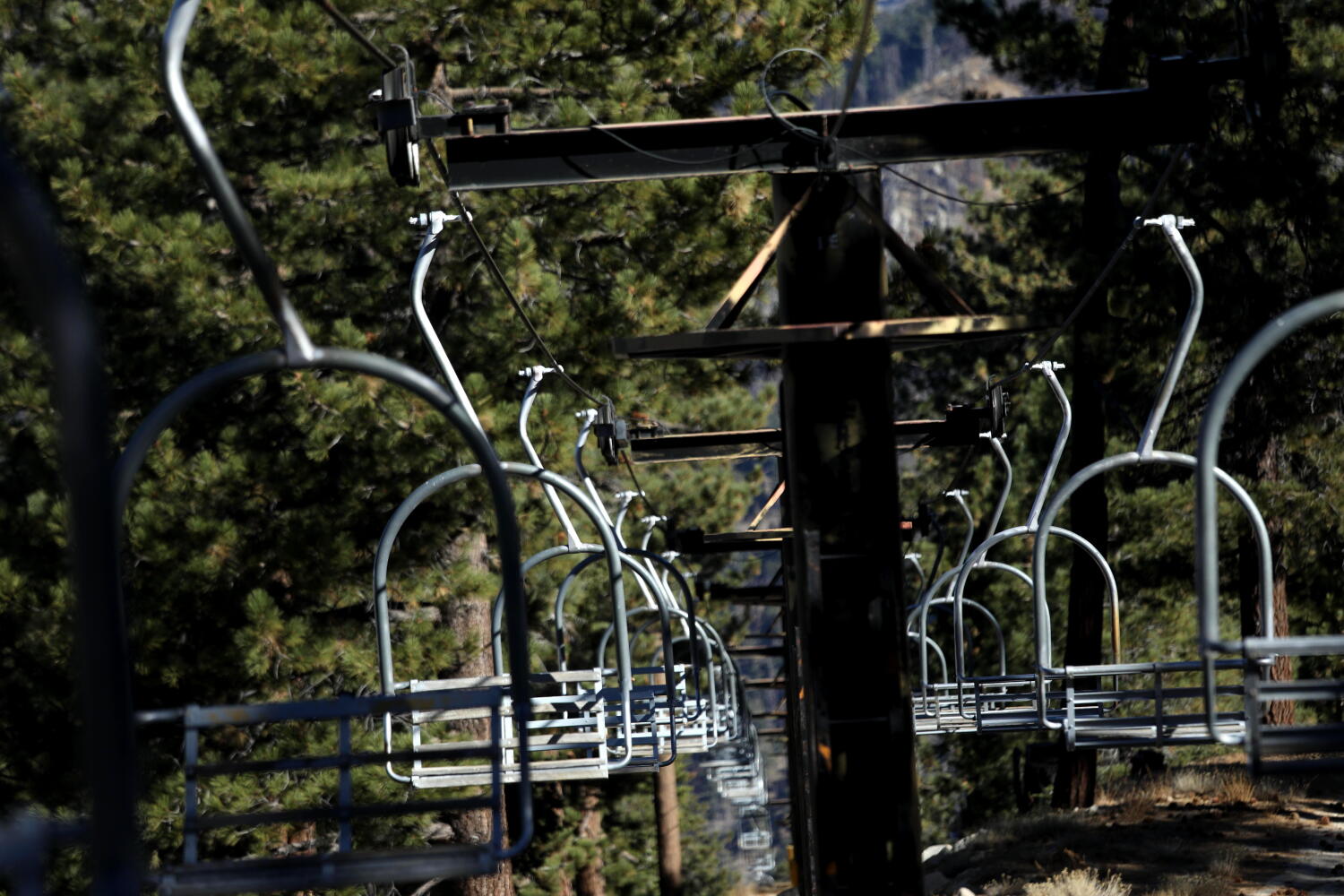
Mt. Waterman ski resort near L.A. relisted for $3.3 million after deal falls through
The historic Mt. Waterman Ski Resort, one of Southern California's steepest ski resorts and only an hour from downtown Los Angeles, was relisted for sale on Wednesday at $3,275,000.

I Spent 5 Days In One Of America's Most Overlooked Places, And I Think I Found My New Favorite Place On Earth
If you know, you really know. View Entire Post ›

Baoji Marathon draws 31,000 runners, highlights ancient culture
From race shirts to finisher medals, the 2026 Baoji Marathon in northwest China's Shaanxi Province brings Baoji's history and culture onto the course.
Recommended








YOUR NEWS, OUR NETWORK.
Do you have Great News you want to tell the world?
Be it updates about your business or your community, you can make sure that it’s heard by submitting your story to our network reaching hundreds of news sites across 6 verticals.